

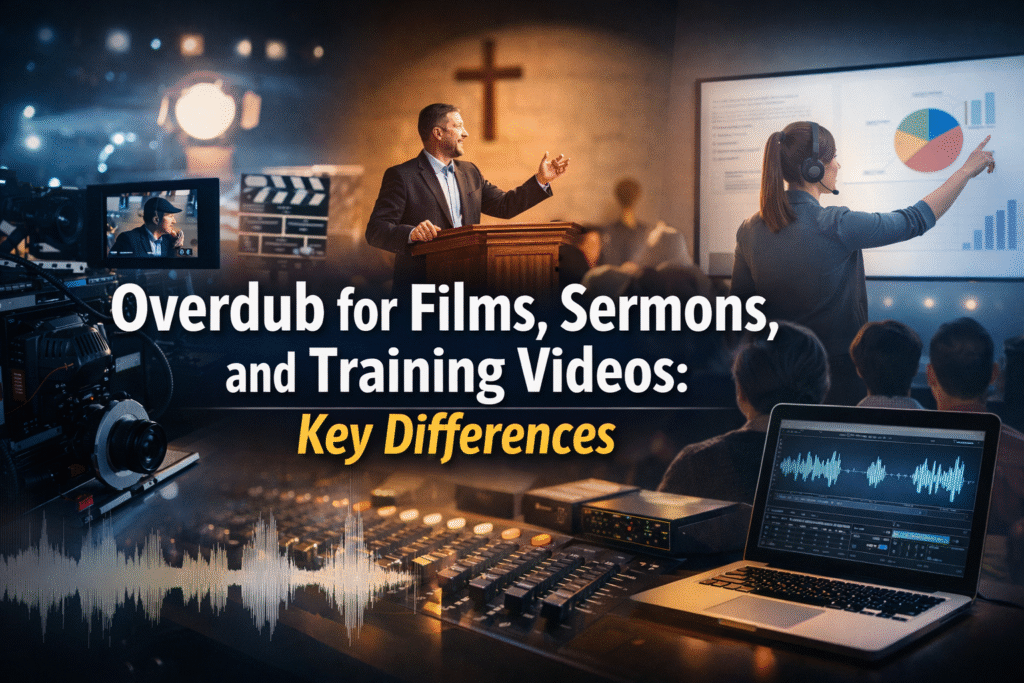
Films, training videos, and instructional series now play a key role in outreach and discipleship, yet literal translation often falls short. When language is transferred word for word, meaning and spiritual impact can be lost. This is why overdub, thoughtful dubbing, and professional localization services matter – so let’s take a closer look at how translation differs for films, sermons, and training videos.
Script Adaptation: When Literal Translation Fails
Spoken language differs from written text, and what reads well can sound stiff or unclear when voiced. This is especially true for biblical audiobooks, teaching films, and online church service content, where biblical allusions and emotional emphasis often need adaptation. Without script adjustments, voice actors may struggle with timing and tone.
Effective audio translation starts with understanding how people listen – not just how they read.
Overdub for Films and Visual Storytelling
Faith-based films and documentary-style content bring unique challenges. Dubbing must align with on-screen timing, emotional tone, and visual cues while preserving the original message. Unlike sermons, films require precise pacing and synchronization, making video script adaptation essential when dialogue must match facial expressions or action. Literal translations often disrupt timing and flow.
This is where professional localization services protect both theology and storytelling. For example, when Christian Lingua localized a faith-based documentary, the script was adapted so the voice actor could match pauses and emotion without sounding rushed or unnatural.
Overdub for Sermons: Preserving Spiritual Tone
Pastoral authority, warmth, and spiritual sensitivity are all present in sermons. The objective of overdubbing sermons for global audiences is to maintain the core of the message rather than repeating every word.
Skilled teams modify rhythm and emphasis to make the sermon feel authentic and natural because cultural expressions and pacing frequently require tweaking. When done correctly, sermon overdub gives followers attending an online church service a sense of personal connection.
For example, a sermon adapted for Spanish listeners may soften sentence structure so the message sounds pastoral rather than formal.
Training Videos and Educational Content
Christian training videos for volunteers, missionaries, and ministry leaders prioritize clarity and instruction. Overdub for training content focuses on comprehension, accuracy, and ease of learning. Adaptation ensures instructions make sense within local linguistic and cultural contexts. Simplified sentence structure, clarified terminology, and adjusted examples help christian media educate effectively without confusion or misunderstanding.
For instance, when Christian Lingua created training videos for volunteers in worldwide ministry, the scripts were modified to make spoken instructions easier to understand and apply to learners from diverse cultural backgrounds.
Why Professional Overdub Matters for the Great Commission
Language plays a vital role in fulfilling the Great Commission. By investing in quality overdub and audio translation, ministries show care for both their audience and the message they carry.
At Christian Lingua, we help ministries move beyond literal translation to meaningful communication – whether for sermons, films, training videos, or biblical audiobooks. Partner with us to share the Gospel clearly and faithfully across languages.