

Why Quality Translation Matters for Churches Serving Diverse Communities
- Christian Lingua
A pastor in Dallas read Isaiah 1:18 one Sunday: "Though your sins are like scarlet, they shall be as white as snow." In the third row, a volunteer leaned over and whispered the verse, word for word, to four families from East Africa who'd been in Dallas maybe three weeks. Nothing was mistranslated. The trouble was the snow. Most of them had never seen it, not once, so a verse that's supposed to make people tear up got a few polite nods and one confused glance at the ceiling.
We think about that morning a lot. Nobody failed. The volunteer was fluent, kind and doing exactly what they'd been asked to do. Still, we run into some version of this in nearly every church we work with that has more than one language in the pews, and most of the time nobody realizes it's even going on. The translation sounds fine. People nod along. Then over lunch someone mentions what they took away from the sermon, and it's a bit off from where the pastor was actually headed.
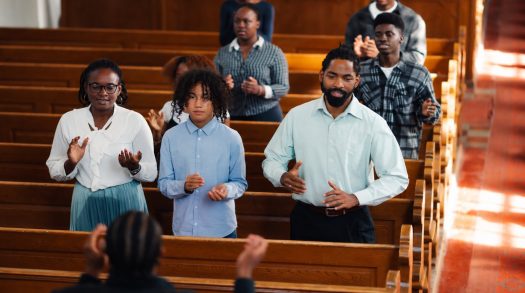
Why Diverse Churches Need More Than Word-for-Word Translation
If we're honest, it usually starts on a Sunday when somebody bilingual says, "I can help," and the sound guy digs an old mic out of a drawer. We're big fans of that kind of generosity. Plenty of great ministries began exactly that way. It just leaves a lot riding on luck.
Word-for-word translation basically assumes that English and the other language line up like two rows of matching socks, and all you have to do is pair them off one by one. Sermons are full of things that don't have twins, though. A pastor's football joke, a phrase like "quiet time," a word like "atonement." None of those come with a neat match in the dictionary.
Take "born again." Into Spanish, it travels fine. But in communities where reincarnation is part of everyday life, a literal version can make people think of being born into another body, which is pretty much the opposite of what Jesus told Nicodemus in John 3. Someone who's spent years working as a church language translator tends to spot this one right away, usually before they've finished reading the sentence, and they'll reach for wording that's clearly about a new life with Christ.
That's the reason church translation in different languages starts, for us, with what the pastor actually meant. When our team sits down with a new sermon, the first thing we do is think about somebody like the families in that third row. What are they going to picture when they hear this? Only after we've talked that through do we start translating.
How Quality Translation Protects Biblical Meaning
Scripture raises the stakes quite a bit. A clumsy illustration in a sermon usually gets forgotten somewhere between the parking lot and Sunday lunch. A verse about sin or salvation is different, because when it comes out wrong it can plant an idea that just isn't biblical, and chances are no one sitting there will catch it.
For that reason, our team approaches the interpretation of the Bible in the church as theology work that happens to involve two languages, rather than language work that happens to involve the Bible. Translators should know which Bible the congregation actually brings on Sunday. A lot of Spanish-speaking evangelicals were raised on the Reina-Valera 1960, and you'll meet grandmothers who can quote whole chapters of it without opening a page. Korean congregations have their own standard Bible too, and they know its wording well. Read one of those familiar verses in different words, and you can actually watch a few people flip open their Bibles to see what happened.
Something pastors don't always expect is how much it matters to use the same words every week. Say "grace" gets translated three slightly different ways over a six-week series. Sooner or later someone's going to raise a hand in small group and ask which grace the pastor meant. To head that off, we put together a glossary for each ministry, and the team sticks to it whether they're working on a Sunday sermon or the study guide that goes with it.
One trend in global missions honestly worries us. More ministries are pushing sermons and books through machine translation and publishing whatever comes out the other side. For a quick email, sure. For gospel-centered content people will read for years, we'd never take that gamble.
Building Trust Across Languages and Cultures
Translation is really about people. When someone hears the gospel in the language they grew up praying in, their shoulders drop a little. They stop working to decode it and start actually listening.
A skilled church interpreter makes that possible. In our experience, the qualities of a good church interpreter have very little to do with being bilingual and a lot to do with preparation and character. Good interpreters know their theology. They usually ask for the pastor's notes a few days ahead and actually go through them, Scripture references included. During the service, they've got a feel for when to slow down and when to just stay quiet for a second and let a moment do its work. And they're humble enough to disappear, because people came to hear the pastor and the Lord, not the person with the headset.
Culture matters as much as vocabulary. A sports joke that brings the house down in Texas might leave a row of Kenyan families staring politely at the floor. A thoughtful interpreter quietly finds another way to make the same point.
Recorded sermons carry that trust into the rest of the week. Our team has translated and overdubbed sermons into Spanish for churches like Highland Park United Methodist Church and Eagle Brook Church. Spanish-speaking families can hear their own pastor, in their own language, while folding laundry on a Tuesday night.
We've seen where this leads, over and over. The family in the back row with the headphones starts helping with coffee. A year later, they're leading a small group. Then the neighbors show up. That's the Great Commission, happening a few feet from the pulpit.
Choosing Translation Support for a Multilingual Ministry
Pastors ask us about the best church translation system almost every week. Our answer tends to surprise them. The gear matters a lot less than the people wearing it. Wireless receivers work. Phone apps that stream audio work. An unprepared interpreter will stumble on all of them.
When you're comparing translation services for churches, look past the price per hour. Ask whether the translators really know Christian theology, and how they handle Bible versions and church vocabulary. Ask whether they can serve Deaf members with actual sign language interpreters instead of captions. Our team has provided American Sign Language interpretation for ministries like Francis Chan's.
Then think beyond Sunday. Most growing ministries eventually want their books and study guides in other languages. Solid Christian book translation services handle much more than the text. Layout, fonts and right-to-left scripts like Arabic all change how a finished book feels in someone's hands. That's why we offer global Christian book translation and typesetting services as one package.
Here's what that looks like when it gets big. Saddleback Publishing asked our team to translate Rick Warren's The Purpose Driven Life into 205 languages and record an audiobook in each one. We assembled 600 translators, editors and theological reviewers. Twenty typesetters wrestled with the layouts, including demanding scripts like Urdu, Burmese and Amharic. Over 12 months, nearly 825 people worked on it together, all with the same assignment: keep the message true in every single language.
At Christian Lingua, our team now supports ministries in more than 220 languages, and every project starts with that same assignment. A dedicated Christian translation service won't replace your volunteers. It backs them up with glossaries, training and professional help when the stakes are highest.
The families in your community are already listening. Help them hear the gospel clearly, in the language of their hearts. Reach out to our team at Christian Lingua and tell us about your next sermon series, book or ministry resource.