

Emerging Trends in Document Translation Services for 2025
- Christian Lingua
It all began with the internet—it took the industrial revolution to meet the dust. Yes, you read it right! It was the year 1996 when over 45 million got glued to their computer screens. Every word they saw on the screen was the result of binary digits. Reading sentences on a screen that emitted light was no less than a miracle. As a result, the document translation industry grew by leaps and bounds—typing and “one software” at a time. As a result, the emerging trends in document translation services for 2025 came about. Discussing documents and not bringing MS Word to the desk is an unpardonable offense. So, a little overview of it before we dive into our topic. Keep going!
Microsoft Word Shaped the ‘Document’ Digitally—with the .doc extension
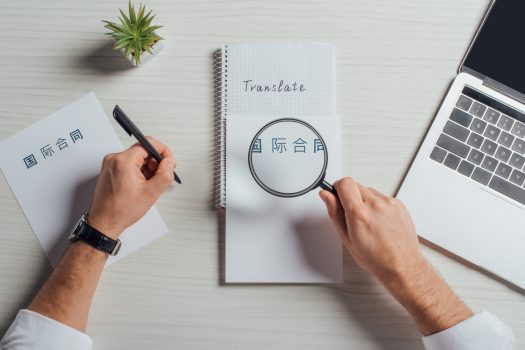
Microsoft’s flagship writing software, MS Word, exploded; it brought the writers’ dream to homes. It was the perfect gambit to type letters and skip paper and pencil. The first version of the machine translation system was launched for the public in 1999 and 2000. Although Microsoft was ambitious, the crude translating software only handled a few famous languages. It was capable of converting English text to Spanish, Italian, French, German, and Japanese. However, in 2010, Microsoft introduced its full-fledged translation tool, which came built-in with MS Word. Astonishingly, it swept and deciphered over 50 languages. Subsequently, more language decoding tools pick the pace. And the world got inspired—with the language they're accustomed to.
We hope the above account has inspired you to know more about the emerging trends in document translation services for 2025. So here it goes!
New Technologies and Methodologies
1. Artificial Intelligence (AI) and Neural Machine Translation (NMT)
AI goes big as it transforms translating services via software. For instance, the NMT uses deep learning to produce naturally sounding and more fluent translations. The contextual translation accuracy of this AI-powered application completely destroys traditional translating methods.
Best Features:
- Improved Accuracy: NMT delivers properly formatted sentences by combining vocabulary and phrases like a human does.
- Natural Language Output: It produces language that matches humans' writing patterns. Thus enhancing readability and conveying the message more accurately.
- Adaptability: NMT also allows for the tweaking of information to target specific industries and audiences.
- Continuous Learning: The NMT system improves with time as it is a machine-learning model. The translation quality and accuracy improve in due course.
2. Machine Translation Post-Editing (MTPE)
Although machine translation capability has significantly reduced the trial and error phase, human intervention remains intact. This is where MTPE comes in. It combines machine efficiency with human intelligence to produce accurate translations. This hybrid model keeps the equilibrium of speed and accuracy right on target. Machine Translation Post-Editing is popular among organizations and small-scale businesses that anticipate quick work turnarounds without losing quality.
Best Features:
- Cost-Effectiveness: It allows employers to skip full-time human editors and save money to invest in other purposeful and profitable projects.
- Speed: MTPE propels the whole translation process. Thus facilitating expedited time-to-market for businesses.
- Flexibility: MTPE is compatible with various types of content. Whether it’s marketing material, official documents, casual blogs, or even technical ones, it does the job.
- Scalability: It supports Big Data and is capable of processing large amounts of content without missing out on quality and consistency.
3. Real-Time Translation Services
Emerging trends in document translation services for 2025 would've been in no man's land without these services. The demand for real-time translation is rising with time as people seek genuine interpretations that sound human. The e-commerce and healthcare domains are especially seeking more and more human-friendly translations. So, to keep the hype and sensitivity in focus, it's the real-time translation services that keep the hype alive and sensitivity aligned. It's not just a trend; it's a necessity.
Best Features:
- Instant Communication: Translation follows clockwork like human writing—flawlessly captivating the minds. Thus facilitating seamless interactions in multilingual settings.
- User-Friendly Interfaces: The best part of real-time translation services is that they can be assimilated with other writing and translating software. Plus, the easy access to information during conversations and conferences makes it an indispensable translation tool.
- Support for Multiple Languages: It handles numerous human language models simultaneously. Thus expediting the overtaxing work of writers and catering to diverse audiences.
- Enhanced Accessibility: Real-time translation services provide interpretations to no-native speakers in real-time.
4. Visual Translation Technologies
This changes everything—pictures—perspective; it adds depth and gives a better understanding of things. In other words, visual translation technologies provide a better picture-perfect perspective in real time. For instance, a fashion brand can offer an AR-powered mirror that allows people to put on clothes virtually before making a purchase. Visual translation technologies also influence users’ lives through their smartphones. They point their phone cameras at the text of a language unknown to them, and voila—instant translations.
Best Features:
- Augmented Reality (AR) Capabilities: Users can translate foreign languages while traveling abroad. Phone cameras activate the translating software that scans text to process translation in real-time.
- Interactive Experience: Users can enjoy visual materials with readable contexts, thus making explanations more explicit and enlightening.
- Mobile Accessibility: It's great to see visual translating technologies becoming portable with phones. Thus helping travelers and professionals break the language barrier during trips and interviews.
- Multi-Language Support: A visual-language translation model scanning writings and processing letters and images at the same time is quite a feature.
5. Specialized Translation Services
With the evolving industries, technologies and translations are becoming more modern. No wonder tailored translation services are on the rise. People are demanding more personalized touches and custom works. They’re ditching the generic ones that seem so obnoxiously outdated. And why not so? AI capabilities have grown immensely over the years; there's no reason why not to harness them to the fullest. Specialized translation services process more fluent and nuanced versions. The accuracy and relevancy are on another level—hands down!
Best Features:
- Industry-Specific Expertise: Tailored translation services are catered to specific sectors. The legal, medical, and technical fields, in particular, are fond of this translation model.
- High Precision:Industries recruit skilled translators to overcome jargon, blunders, and nuances. This helps eliminate errors in critical documents.
- Cultural Sensitivity: This language models understanding and deciphering cultural contexts, as it brings digestible reading diversity for the readers. Whereas revelations and relevance flow like liquid.
- Terminology Management: Specialized translation services maintain industry-specific terminology throughout glossaries, guidebooks, and databases.
Future Trends and Innovations
1. Increased Demand for Localization
With businesses expanding on a global scale, localized content has become the need of time. Thanks to the tried and tested AI-powered language tools helping companies meet in accord. Language translation applications adapt localized content and make sure its linguistics complement contexts and cultures. It also stresses upon the importance of learning expressions and nuances of foreign languages.
2. Focus on Accessibility
The world today is seen striving for language inclusivity without putting any more emphasis on English. The need to translate documents and other paperwork is now a commonplace thing in writing-oriented workplaces. Contentedly, many translation tools are available to process foreign languages and do the job. This also means less reliance on human translators when tools do it—better.
3. Integration of Voice Technology
Voice recognition technology has taken the world by storm. It is expected to play a significant role in future translation services for e-commerce, travel & tours, and airports. Witnessing a language translating on the true dial is a wonder to behold. Enhancements in end-to-end communications between customer care and countries are about to become extraordinarily apparent and expressive.
Final Thoughts
Our acknowledgments of the novel Artificial Intelligence began revving and reeling in the backdrop. This era of machine-learning marvels has made different dialects and document translation become crystal-clear. It's great to see humans and AI interacting with each other to decipher documents in the required language. In fact, they both became acquainted prior to translating languages.
Of course, data privacy and ethical considerations are met before humans and machines meet. For sure, it was AI that made our lives easier—and English documents readable and convertible. Indeed, the influence of the ultramodern digital revolution was apparent in this state-of-the-art software. Finally, words and sentences became understandable for the masses—they became meaningful.