

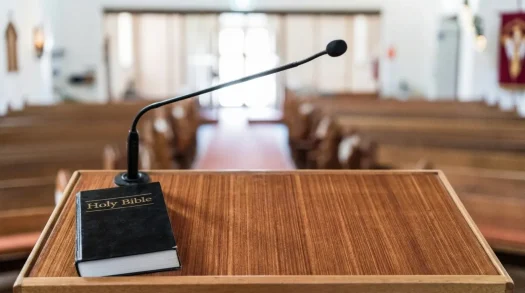
A weekly sermon carries more than information. It carries doctrine, pastoral care, biblical interpretation, and the voice of a shepherd speaking to real people. That is why church sermon translation services cannot work like a standard business translation project. A sermon is not a flyer. It is not a product page. It is gospel-centered content meant to be heard, trusted, and lived.
We’ve noticed a troubling trend in global missions. Churches want to reach more languages, but they often rely on rushed volunteers, automatic tools, or translators who understand language but not theology. The words may sound correct on the surface. Yet the meaning can shift. A phrase about grace, repentance, covenant, or the Holy Spirit can lose its biblical weight in another culture.
That is where accurate Christian translation services become essential. The goal is not simply to move English words into Spanish, Ukrainian, Arabic, Korean, or another language. The goal is to make sure the Word is heard correctly. Clearly. Faithfully.
What Consistency Looks Like in Church Sermon Translation Services
Many churches start strong. They translate one sermon, then another, then a special Easter message. But weekly ministry requires a system. Weekly sermon translation for churches needs steady terminology, trained project management, and translators who understand the pastor’s tone over time.
Our team builds consistency through glossaries, theological term lists, review workflows, and ministry-specific style guides. If your church uses certain phrases often, such as “new life in Christ,” “walk with God,” or “living under grace,” those phrases should not change randomly from week to week. Consistency helps listeners trust the teaching.
This matters even more when you translate church sermons consistently across many formats. A sermon may become subtitles, a voice-over, a transcript, podcast notes, or small-group material. If each version sounds different, the message becomes weaker. If each version follows the same theological and linguistic direction, the church gains a reliable channel for ministry.
Why Professional Christian Sermon Translators Matter
A good translator knows grammar. A professional Christian sermon translator knows that grammar is only the beginning. Sermons include Scripture references, church language, pastoral emotion, biblical metaphors, and culturally sensitive examples. These require spiritual discernment, not just technical skill.
To be honest, one of the hardest parts of sermon translation is not the difficult words. It is the familiar words. “Saved.” “Lord.” “Flesh.” “Kingdom.” “Witness.” These terms may have several possible translations, and not all of them carry the same biblical meaning in another language. Scripture localization demands careful choices.
That is why Christian language translation for churches must involve people who respect the Bible, understand ministry settings, and know how different cultures receive religious language. Our experience shows that spiritually aware translators protect both accuracy and tone. They help the sermon sound natural without flattening the truth.
When Sermons Need Interpreting, Not Only Translation
Some churches need written translation. Others need live or recorded interpreting. Church interpreter services for sermons are especially important for conferences, multilingual congregations, mission events, and online church services where people listen in real time.
Interpreting requires a different kind of discipline. The interpreter must follow the pastor’s thought quickly while preserving theological accuracy. A missed phrase can change the meaning. A poor cultural choice can distract listeners from the gospel. That is why preparation matters. Sermon notes, Scripture passages, key terms, and ministry context should be shared before the service.
At Christian Lingua, we are convinced that interpretation should serve the message, not compete with it. The interpreter should never feel like a barrier between the pastor and the listener. The listener should feel cared for, included, and able to receive the Word in a language that reaches the heart.
How Churches Can Build a Reliable Sermon Translation Workflow
The strongest sermon translation workflows are simple but disciplined. Send the sermon manuscript or transcript early. Keep a shared glossary. Review recurring theological terms. Decide which format you need first: subtitles, dubbed audio, transcript, or live interpreting. Then build from there.
This is how church sermon translation services become sustainable. A church does not need to rebuild the process every Monday morning. With the right partner, weekly sermon translation for churches becomes a steady part of ministry, not a weekly emergency.
The Great Commission was never limited to one language. If your sermons are already feeding your congregation, they can also serve unreached people groups, immigrant families, partner churches, and believers who are hungry for biblical teaching in their own language. At Christian Lingua, our team helps ministries protect the message while expanding its reach. The aim is simple: faithful words, clearly heard, across cultures.